
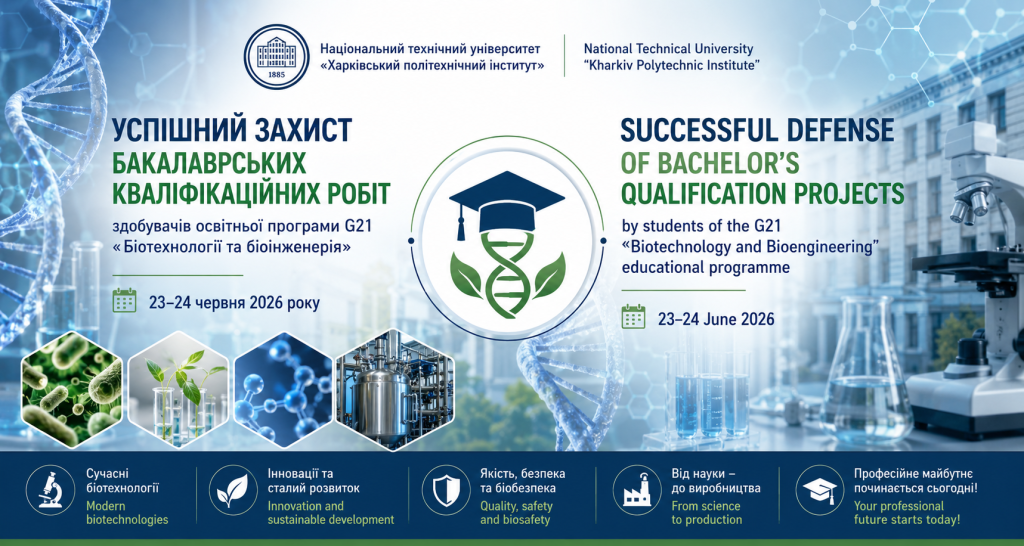
On 23–24 June 2026, the Department of Biotechnology, Biophysics and Analytical Chemistry of the Educational and Scientific Institute of Pharmacy at the National Technical University “Kharkiv Polytechnic Institute” successfully held the defense of Bachelor’s qualification projects presented by students of the G21 “Biotechnology and Bioengineering” educational programme.
During the meetings of the Examination Board, the students demonstrated a high level of professional competence, the ability to analyze modern biotechnological processes, apply innovative approaches to process design, justify the selection of technological schemes, and evaluate the efficiency of biotechnological production.
The topics of the qualification projects reflected the latest trends in industrial, pharmaceutical, food, and medical biotechnology. Considerable attention was devoted to technologies for the production of biologically active compounds, including riboflavin, recombinant human insulin, glutamic acid, succinic acid, carotenoids, erythritol, and fibrinolytic enzymes, as well as to the development of antimicrobial products based on Bacillus subtilis.
A separate group of projects focused on pharmaceutical biotechnology and biomedicine. Students investigated advanced technologies for the production of vaccines against cervical cancer, next-generation plant-derived CoVLP/Covifenz vaccines, the prospects of developing antibody-drug conjugates for targeted cancer therapy, and the application of bacteriophages as the basis for novel therapeutic agents.
Food biotechnology was also prominently represented among the defended projects. Students proposed innovative approaches to improving the production technologies of yogurt, kefir, baker’s yeast, wheat bread enriched with flaxseed meal, dry fermented sausages using starter cultures, and brandy produced with specialized yeast strains. These projects successfully combined modern biotechnological solutions with current requirements for food quality, safety, and functional properties.
Equally significant were the projects devoted to environmental and agricultural biotechnology. The graduates presented technological solutions for biogas production from agro-industrial waste and the development of bioinsecticides based on entomopathogenic bacteria, addressing the contemporary principles of sustainable development, biosafety, and the circular economy.
Throughout the defense, the students demonstrated their ability to work with contemporary scientific literature, analyze global trends in biotechnology, apply mathematical modelling techniques, perform techno-economic assessments, and design biotechnological production processes. Particular attention was paid to Good Manufacturing Practice (GMP), quality assurance, biosafety, environmental sustainability, and the prospects for industrial implementation of the proposed technologies.
The Examination Board highly appreciated the relevance of the research topics, the scientific novelty of several projects, the practical significance of the proposed solutions, the high quality of the presentations, and the students’ professional use of modern digital tools for presenting research findings.
The Department sincerely congratulates the graduates on the successful completion of their studies and the achievement of their Bachelor’s degree. We wish our young professionals continued success in their careers, fruitful continuation of their education through Master’s programmes, new scientific discoveries, and significant contributions to the advancement of modern biotechnology, biophysics, and pharmaceutical science.