
Active scientific research continues in the Laboratory of Cyber-Physical and Robotic Systems, established last year at the department. This modern research space has become an important center for experimental activities, fostering the development of advanced technologies in automation, robotics, and intelligent control systems.
This time, PhD students focused on the development, testing, and debugging of a new remote wireless control system for mobile cyber-physical platforms. The project aims to create intuitive and efficient human–machine interaction tools that meet contemporary requirements for safety, reliability, and functionality.
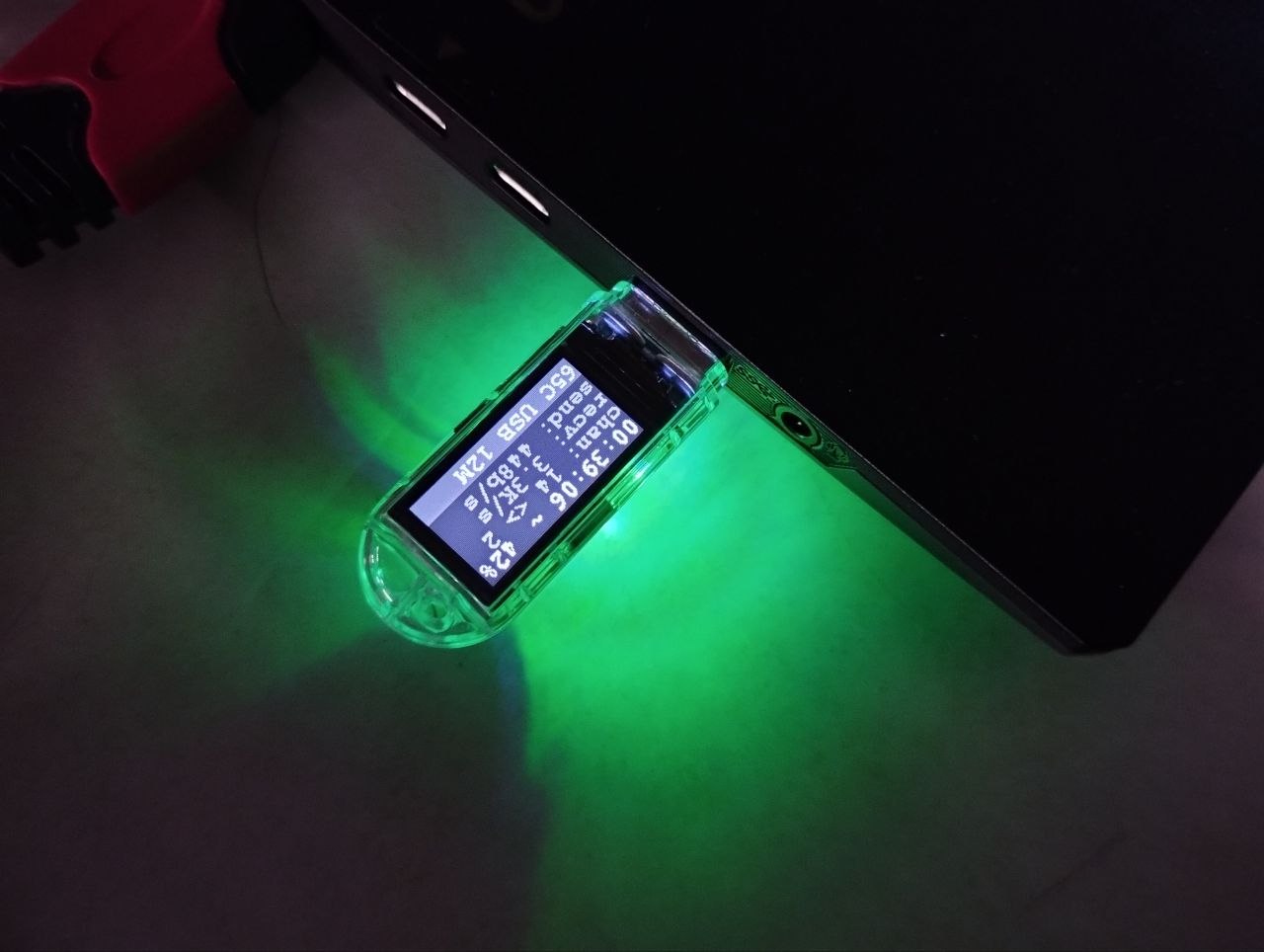
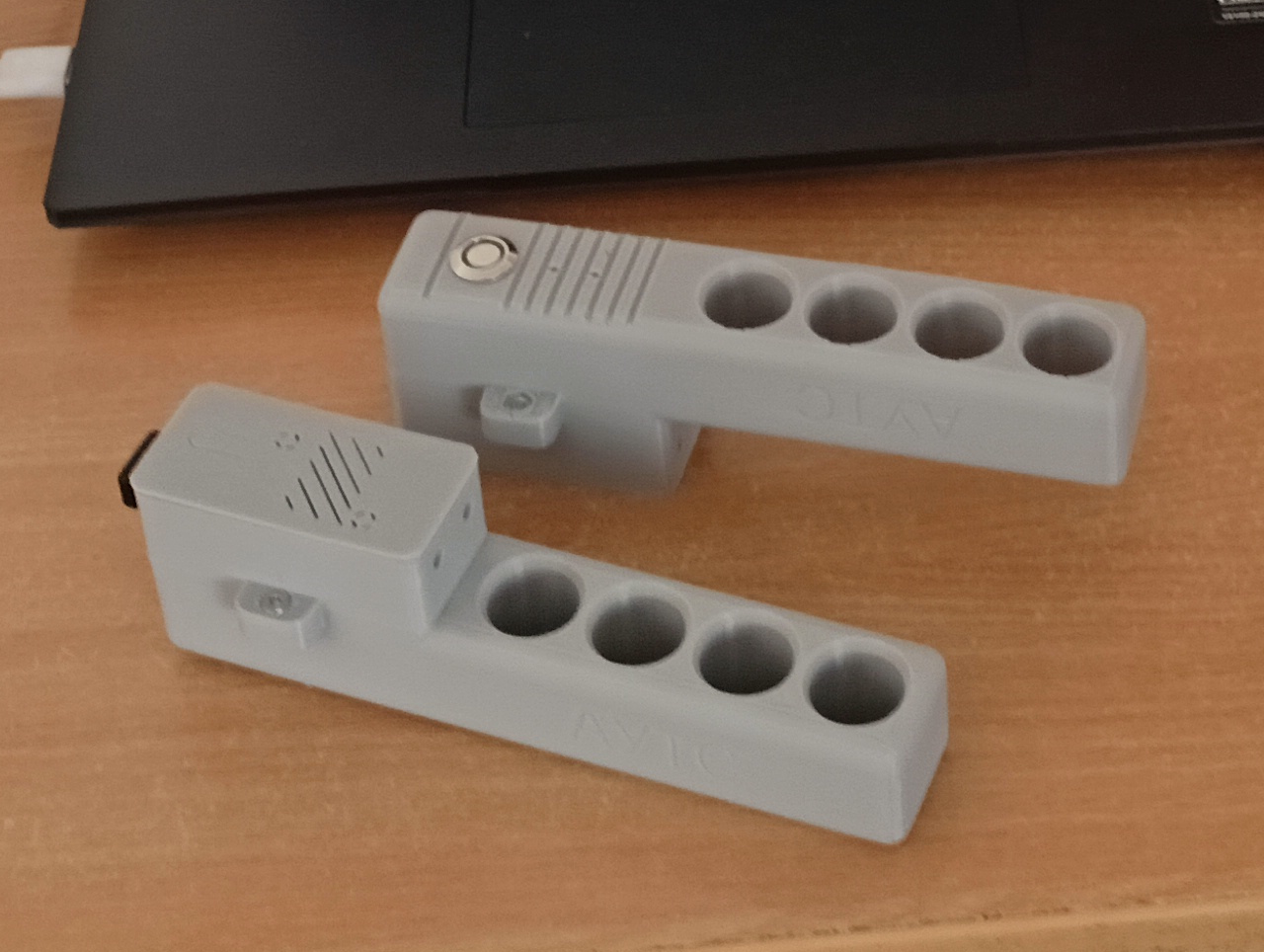
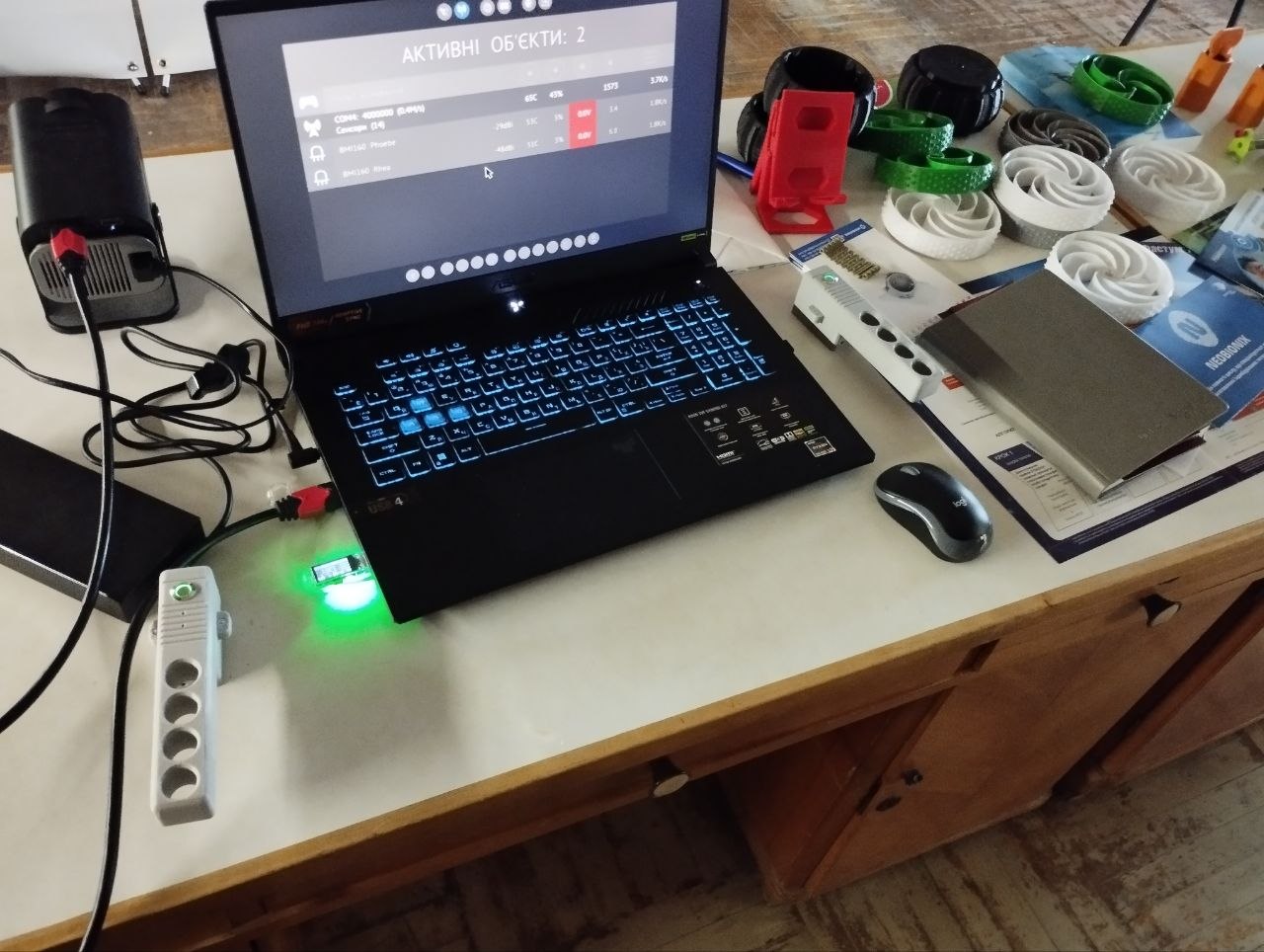
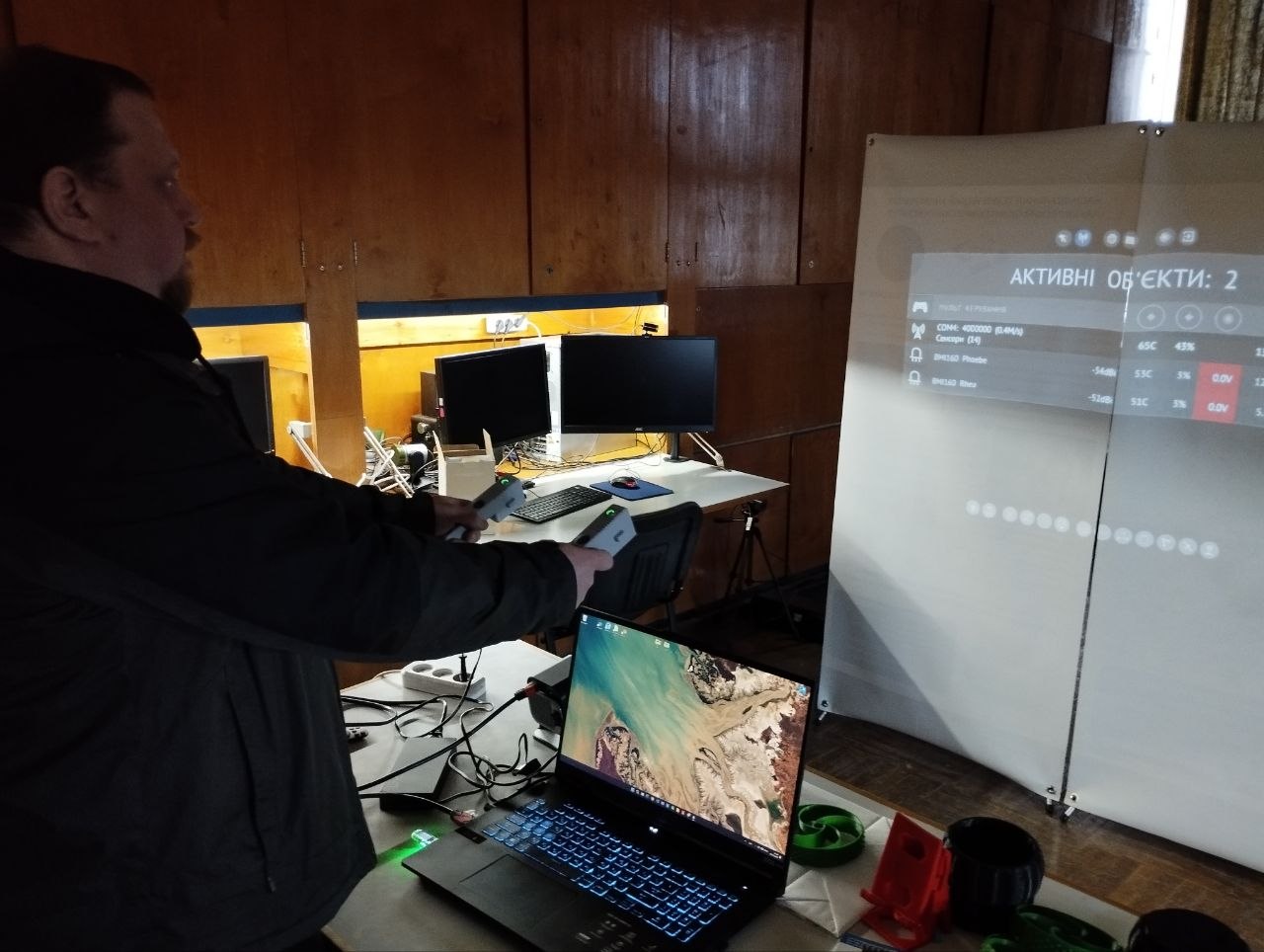
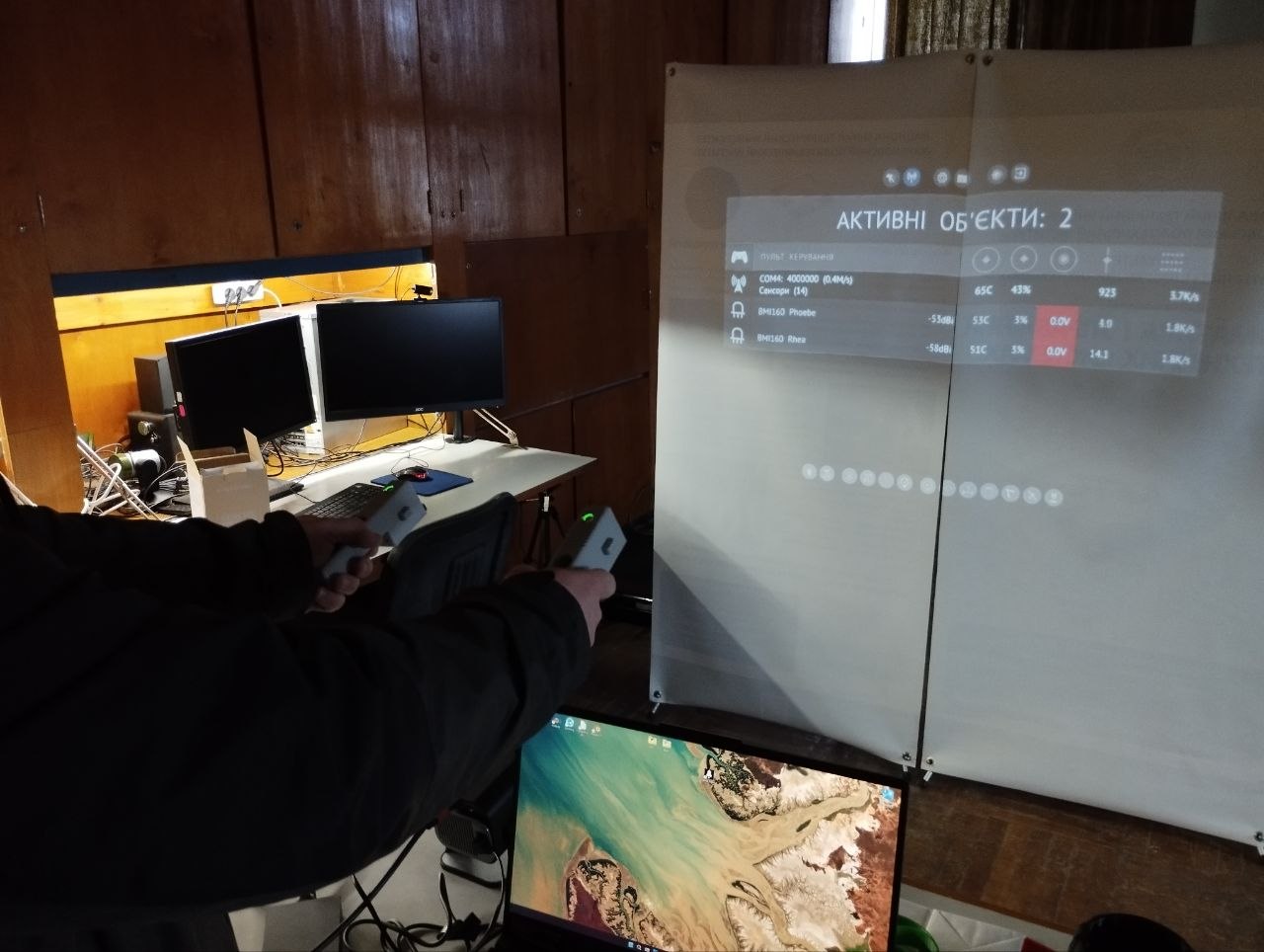
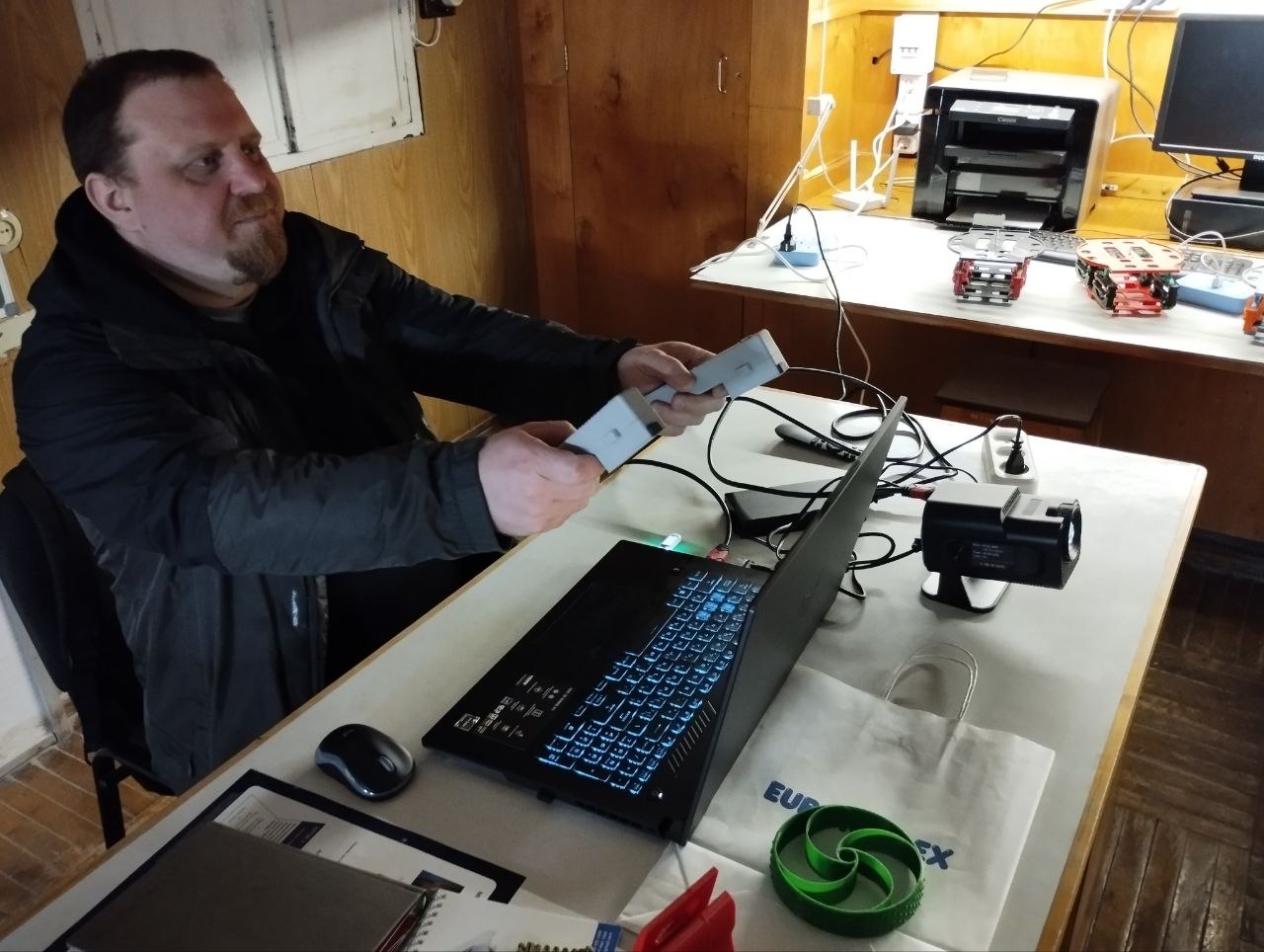
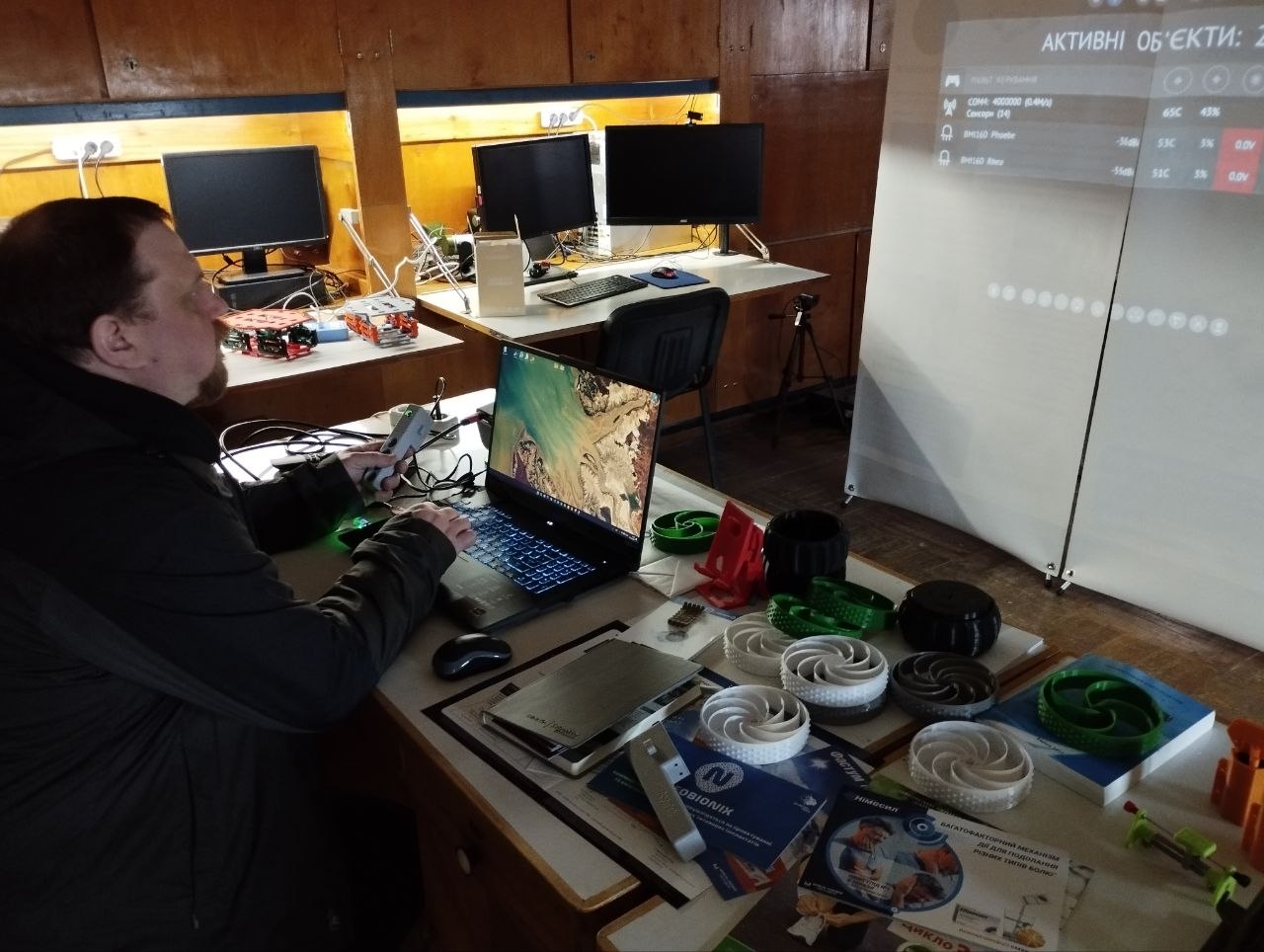
A key component of the system is a spatial manipulator equipped with an embedded inertial measurement system. This feature enables it to convert an operator’s movements in space into control commands for a mobile platform. The system operates on an autonomous power supply, while data are transmitted to a receiving device via a secure wireless channel, ensuring mobility, reliability, and ease of use.
To facilitate testing and refinement, a specialized software suite with a virtual environment was developed. It enables system simulation, performance analysis, and optimization of control algorithms without the risk of damaging physical equipment. In addition to calibrating the manipulators, the system allows users to adapt to its controls through a small interactive game. In this training scenario, a spacecraft navigates through outer space, avoiding asteroids and hostile ships while collecting valuable resources, making the learning process both engaging and effective.
The laboratory, established last year, has already become an essential component of the department’s research activities. It is equipped with modern tools, measuring instruments, assembly and repair equipment, and a dedicated testing ground for mobile robotic platforms. These facilities enable PhD students to conduct experimental studies, validate their solutions, and obtain results for their dissertation research.
The implementation of such innovative projects contributes to the professional development of young researchers and advances scientific progress in the field of cyber-physical and robotic systems. At the same time, these achievements serve as a compelling demonstration of the opportunities available to prospective students who choose to pursue studies in this specialty.
The laboratory’s work once again confirms its status as a modern hub of engineering creativity, innovation, and the training of highly qualified specialists.