





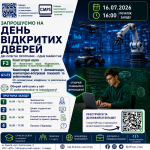
Department of Computer Modeling of Processes and Systems (CMPS)
The CMPS Department educates professionals who combine a strong foundation in mathematics, engineering thinking, and practical competencies in modern information technologies.
Our graduates pursue careers in software development, data analytics, artificial intelligence, robotics, navigation, and the design of complex computer systems.
Educational Opportunities for Applicants
F3 Computer Science
Educational Programme “Computer Science. Modeling, Design and Computer Graphics”
Educational Track “Design, Development and Analysis of Computer Systems”
Programme Content: Development of websites and mobile applications, Data Science and Artificial Intelligence (AI), application design and programming, cloud technologies and DevOps, and cybersecurity.
Technologies and Tools: Python, C++, Java (Spring), C#, JavaScript, HTML/CSS, React, Vue.js, .NET, Unity, Django, Kotlin, Android SDK, Git, modeling and data visualization tools.
Career Opportunities:
- Frontend / Backend / Full Stack Developer
- Software Developer / Python Developer
- Data Analyst / Machine Learning Engineer
- Mobile Developer / Game Developer
- QA Engineer / DevOps Engineer / Project Manager
G7 Automation, Computer-Integrated Technologies and Robotics + F3 Computer Science
Educational Programme “Intelligent Cyber-Physical and Robotic Systems”
One programme of study — two specialties. The programme integrates computer science, automation and robotics, programming, machine learning, computer vision, sensor data processing, 3D modeling, and control within a single curriculum.
Programme Content: development of intelligent cyber-physical systems, programming of robots and embedded devices, machine and deep learning, computer vision, control systems, navigation, and cybersecurity.
Career Opportunities:
- Robotics Engineer / R&D Engineer
- Embedded Software Engineer
- Computer Vision Engineer / Machine Learning Engineer
- Automation Engineer / Automation QA Engineer
- System Integration Engineer / Data Engineer
How the Study Process Is Organised
The curriculum combines fundamental academic training, modern programming, computer systems design, and practical work on individual and team-based projects.
Educational Track “Design, Development and Analysis of Computer Systems”
- algorithms, data structures, and modern programming;
- design, architecture, and development of software systems;
- software analysis, testing, and quality assurance;
- artificial intelligence, data analytics, computer graphics, and project-based learning.
Preparation for the Development of Intelligent Systems
- programming, microprocessor-based and embedded systems;
- machine and deep learning, computer vision, and sensor data processing;
- robot design, 3D modeling, and digital manufacturing;
- automation, navigation, and real-time control.
Application Areas of Intelligent Systems
The interdisciplinary programme prepares students to work with technologies applied in industry, logistics, healthcare, autonomous systems, and smart infrastructure.
Logistics
Autonomous mobile robots and unmanned systems support the automation of delivery, monitoring, and cargo handling.
Healthcare
Intelligent diagnostic, rehabilitation, and assistive systems employ data, sensors, and artificial intelligence algorithms.
Industry
Industrial robots, collaborative robots, and automated systems enhance the accuracy, productivity, and safety of manufacturing processes.
Smart Living
Smart devices, service robots, and automation systems perform repetitive tasks and interact with their environment.
What You Will Gain During Your Studies
Professional Portfolio
During your studies, you will be able to build a professional portfolio comprising web and mobile applications, software systems, data analytics and artificial intelligence projects, as well as prototypes of robotic and cyber-physical systems within the interdisciplinary programme.
International Engagement
The Department promotes academic mobility, international cooperation, and joint educational and research initiatives with partner universities. Students may participate in international events, exchange programmes, and English-language projects.
Research and Innovation
Students may engage in research in mathematical and computer modeling, artificial intelligence, navigation, control systems, robotics, and the analysis of complex engineering systems, as well as participate in competitions, hackathons, and student projects.
Collaboration with the IT Industry
The Department maintains active cooperation with IT companies and technology organisations. Industry professionals contribute to selected lectures and practical classes, deliver guest lectures, provide consultations and project mentoring, support students’ practical training, and participate in discussions concerning current professional requirements for future graduates.