

Since 2021, our faculty members have dedicated considerable effort to disseminating the fundamental concepts of sustainable development among learners at all educational levels, including school students. Particular focus is placed on exchanging sustainable practices that are viable for real-world application in both daily life and business activities.
One of the key achievements was the introduction of the course “Ecological Principles of Sustainable Development” in English, starting from the fall semester of 2021. This approach allows master’s students to master contemporary terminology, use the latest sources of information, and search tools when studying the concept of sustainable development, relying on materials from experts available in English.
Another significant contribution was the release of the educational handbook in English titled “Sustainable Development/Tutorial for Students of Specialty 101 ‘Ecology,’ 183 ‘Techniques and Technologies of Environmental Protection’ for All Study Forms” authored by T. Tykhomyrova, V. Sebko, V. Babenko. – Kharkiv, 2022. – 178p. https://repository.kpi.kharkov.ua/handle/KhPI-Press/63071
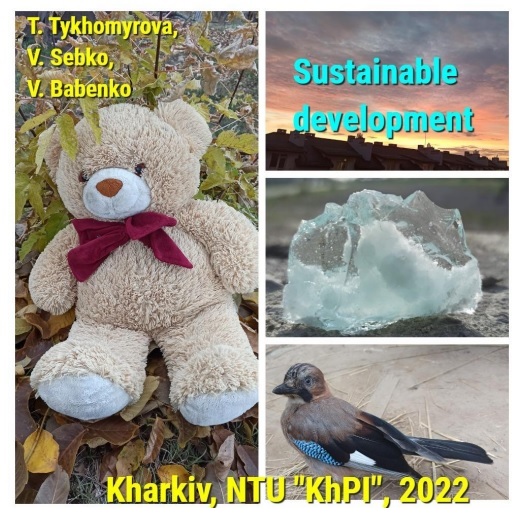
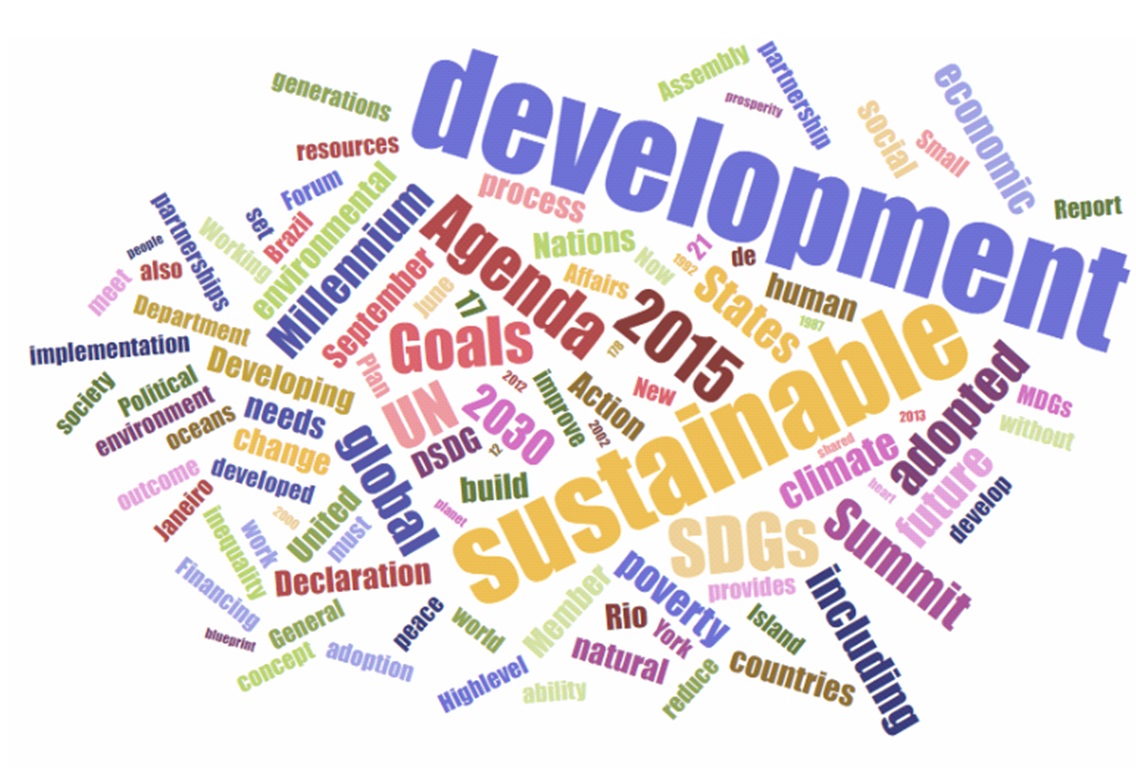
The last chapter of this educational manual is devoted to Ukraine’s steps towards sustainable development, taking into account the consequences of active military actions.In addition, methodological guidelines in English have been issued for the practical work on “Correspondence of Grant and Start-up Applications to Sustainable Development Goals” for students of various specialties as well as methodological guidelines for various types of assignments within the course ‘Ecological Principles of Sustainable Development’ in English
https://repository.kpi.kharkov.ua/handle/KhPI-Press/7279
https://repository.kpi.kharkov.ua/handle/KhPI-Press/80475
From October 23 to 27, 2023, Associate Professor T.S. Tykhomyrova delivered five lectures to students at the Warsaw University of Technology as part of the ERASMUS+ teaching mobility program. The lectures focused on the challenges of sustainable development, understanding its core goals, and the specifics of its implementation across different countries. Her engaging and unconventional presentation, offering a fresh perspective on the subject, successfully stimulated students’ interest in practically applying sustainable development concepts within their engineering practice.
https://web.kpi.kharkov.ua/htpe/uchast-u-programi-erasmus/
Since 2013, the department has been organizing an annual competition on ecological topics for schoolchildren, details of which can be found at https://web.kpi.kharkov.ua/htpe/zaproshuyemo-vzyaty-uchat-v-h-ekoforumi/. This competition aims to popularize conscious and caring attitudes towards nature among schoolchildren and fosters the dissemination of ecological knowledge among the youngest citizens of the country. Notably, in recent years, there has been a trend of an increased number of works dedicated to the consequences of climate change from the perspective of children, indicating their understanding of the issue, partly due to the enlightening efforts of various environmental organizations and the department.
https://web.kpi.kharkov.ua/htpe/konkurs-na-temu-ekologichnogo-vidnovlennya/
https://web.kpi.kharkov.ua/htpe/rezultaty-konkursu-videorolykiv-na-ekologichnu-tematyku/
https://web.kpi.kharkov.ua/htpe/dvanadtsyatyj-ekologichnyj-konkurs-dlya-shkolyariv-poyihaly/
The faculty members of our department continuously encourage school students in their desire to improve the environment by serving as academic advisors for the Junior Academy of Sciences of Ukraine projects (https://man.gov.ua/ ). During the 2024/2025 academic year, two key projects focused heavily on sustainable development.
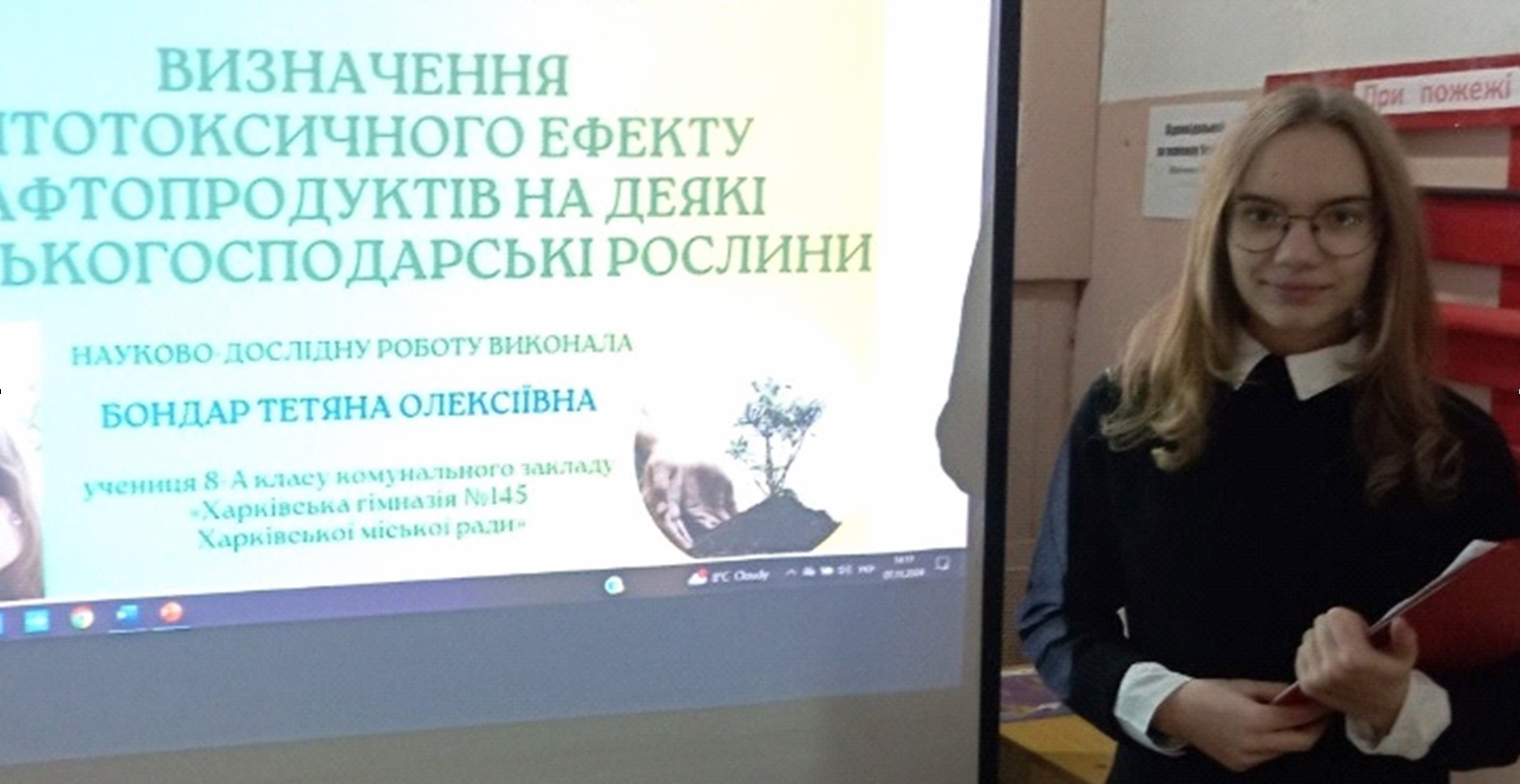
T. Bondar (8th grade, Lyceum No. 145) presented her research on “Determining the phytotoxic effect of petroleum products on certain agricultural plants” in the “Environmental Protection and Rational Nature Management” section, securing 1st place regionally and 2nd place nationally. The analyzed soil samples were taken from the aftermath of a massive oil depot fire triggered by a drone strike in Kharkiv’s Nemyshlianskyi district (February 2024). Academic Advisor: Head of the Department, PhD, Assoc. Prof. O.V. Shestopalov.
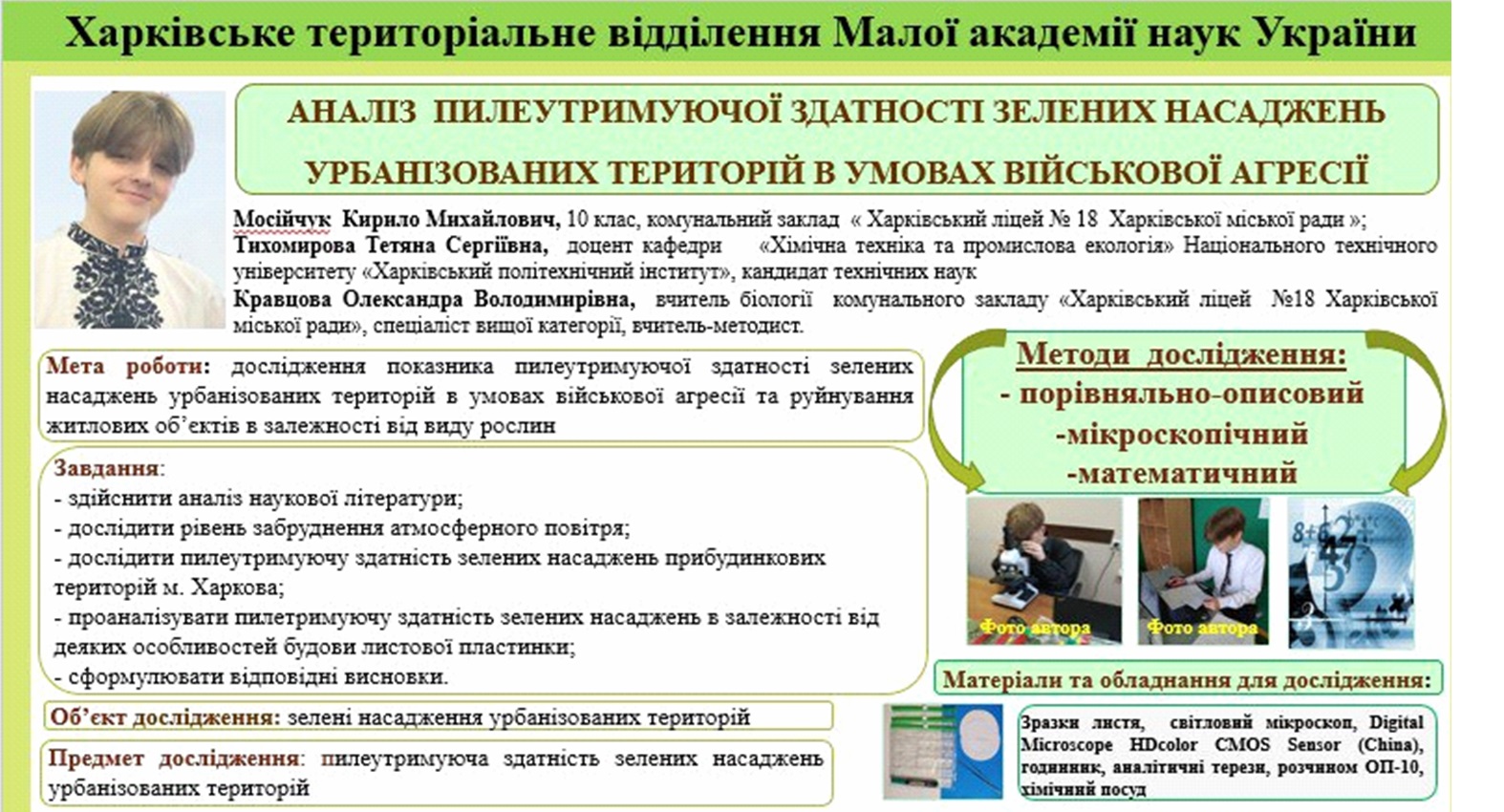
K. Moseichuk (10th grade, Lyceum No. 18) presented his work titled “Analyzing the dust-retaining capacity of urban green spaces under conditions of military aggression” within the “Ecology” section. The scientific supervisor was PhD, Assoc. Prof. T.S. Tykhomyrova. Driven by the realities of war, the study addressed the severe spikes in atmospheric dust pollution immediately following the destruction of urban infrastructure. Together with his supervisor, Kyrylo conducted a pioneering study on the dust-retaining properties of common residential trees under extreme dust exposure.
When defining research directions for Ph.D. candidates, significant attention is devoted to fostering an environmentally conscious approach to various technological processes. Since 2022, numerous dissertation topics have been directly linked to the implementation and practical application of sustainable development principles, such as
⦁ O.V. Adashevsky, under the supervision of Prof. V.B. Bairachny “Development and Implementation of Ecologically Safe Technology for Coffee Production and Consumption”
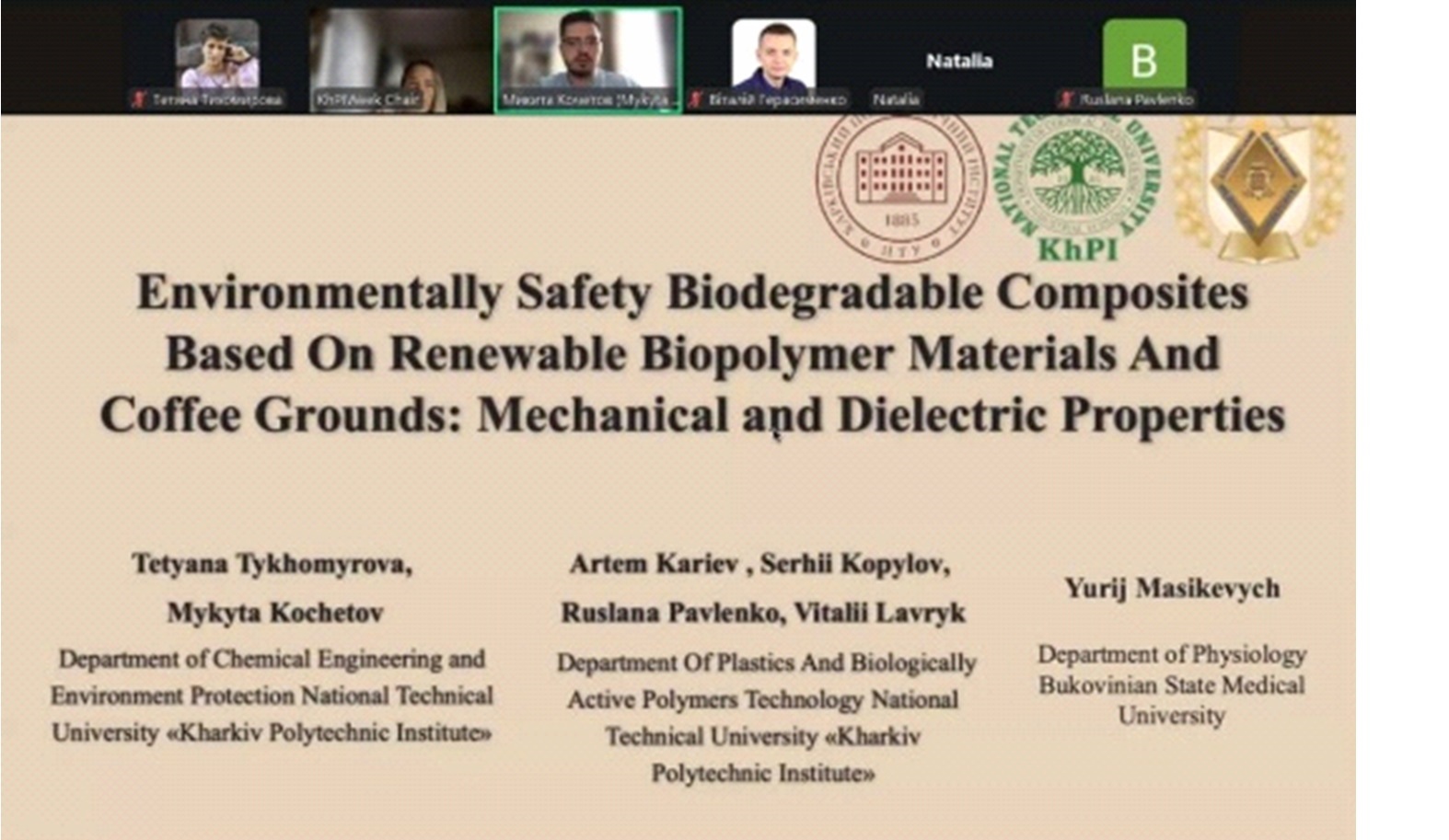
⦁ M.S. Kochetov, under the supervision of Assoc. Prof. T.S. Tykhomyrova. “Development and implementation of an environmentally safe technology for the utilization of coffee production and consumption”
⦁ K.V. Chikiryakin, under the supervision of Prof. O.V. Shestopalov “Problems and Methods of Forming Ecological Culture in Society.”
⦁ V. V. Kruichkova, under the supervision of Assoc. Prof. T.S. Tykhomyrova “Development of a sustainable textile waste management concept”
⦁ A. I. Tytarenko, under the supervision of Prof. N.M. Samoilenko “Optimizing environmental management within the framework of sustainable practices and source-separated consumer waste collection.”
⦁ P. V. Makeev, under the supervision of Prof. V.B. Bairachny “Greening the sustainable processing of complex and unclassified consumer waste”
⦁ M.V. Hekov, under the supervision of Assoc. Prof. A. O. Sakun “Ecological and legal aspects of implementing sustainable development goals in an urban community (socio-ecological-economic system)”
⦁ V.S. Zinchenko, under the supervision of Prof. Ie.V. Manoilo “Environmental impact assessment of wastewater on aquatic ecosystems and mitigation measures in the context of sustainable development”
See more about our post graduate students and their research work https://web.kpi.kharkov.ua/htpe/ychebpro/aspirantura-kafedri/
The educational concept for specialists in the field of Ecology (E2) and Environmental protection technologies (G2) aims to foster a scientifically grounded worldview based on understanding and implementing the principles of sustainable development in their professional activities.
This is achieved through the implementation of the following methodological developments during educational activities:
⦁ Introduction to the concept of sustainable development and sustainable development goals during the course “Introduction to the Specialty. Introductory Practice” in the first year.
⦁ Analysis of the alignment of technical solutions with sustainable development goals during the execution of calculation and course projects in professional-oriented disciplines.
⦁ Participation of students in methodological seminars on regional sustainable development issues.
⦁ Analysis of the alignment of sustainable development goals with regional development strategies, regional waste management plans during practical sessions.
⦁ Participation of students and faculty in workshops that demonstrate conscious waste management and production practices, which form the basis of sustainable development in the country.
⦁ Mandatory analysis of the alignment with sustainable development goals for all grant applications carried out by students and faculty, as well as during practical sessions of the course “International Cooperation and Grant Writing in Ecology.”
⦁ Involvement of department faculty in seminars, conferences, and meetings related to sustainable development topics.
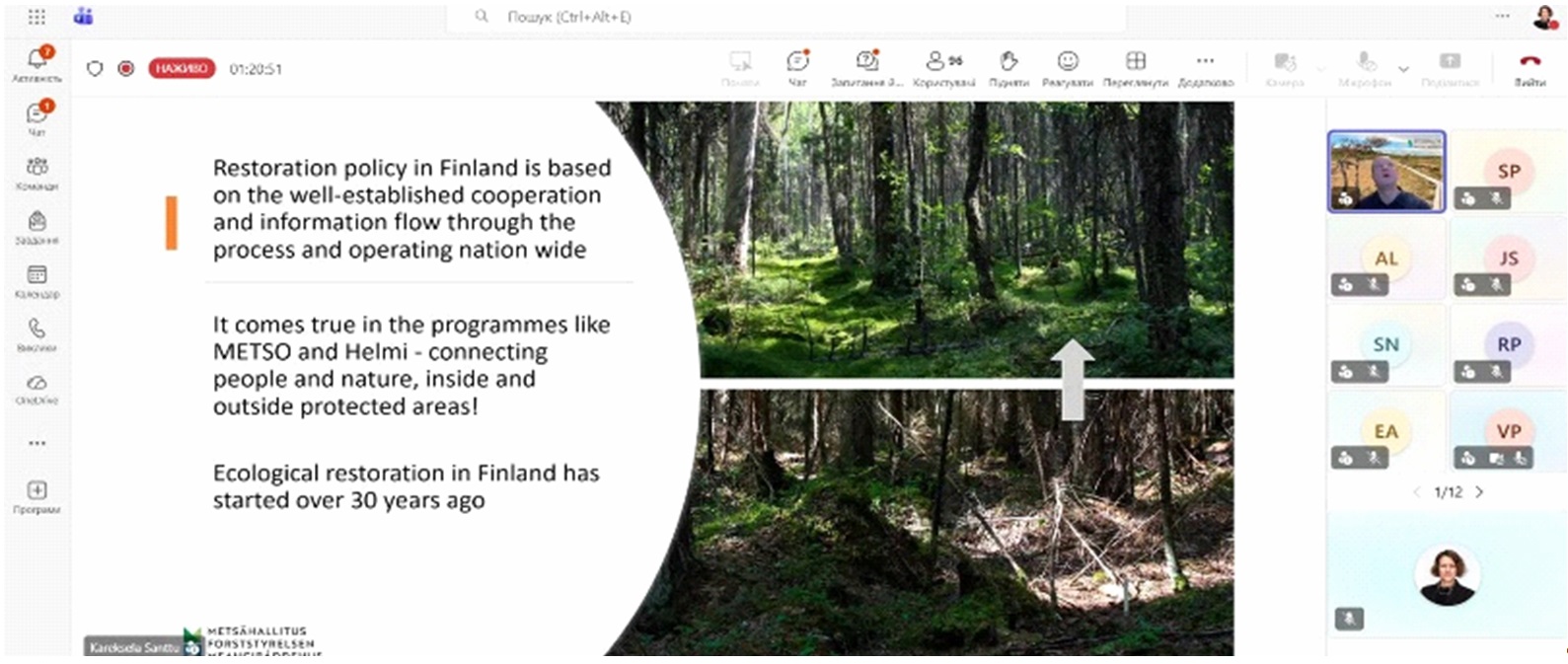
https://web.kpi.kharkov.ua/htpe/zberezhennya-bioriznomanittya-u-finlyandiyi-plan-vidnovlennya-lisiv/
https://web.kpi.kharkov.ua/htpe/mizhnarodna-spivpratsya-u-suchasnomu-osvitnomu-prostori/
https://web.kpi.kharkov.ua/htpe/uchast-kafedry-u-roboti-mizhnarodnoyi-konferentsiyi-2025/
https://web.kpi.kharkov.ua/htpe/uchast-u-proyekti-climate-change-bootcamp/
⦁ Explanation of the fundamentals of sustainable development by department faculty during television and radio broadcasts at the regional level. Further details can be found at the link https://web.kpi.kharkov.ua/htpe/pryamij-efir-na-suspilnomu-radio-u-m-harkovi/.
Our department provides a comprehensive range of courses focused on sustainable development and environmental resilience. Our bachelor’s programs feature subjects such as Urban Ecology, Organization and Management of Nature Conservation, Norms of Anthropogenic Environmental Impact, and Modeling and Forecasting of Environmental Conditions. At the master’s level, we delve deeper into sustainability implementation through courses like Ecological Foundations of Sustainable National Development, Technogenic and Environmental Safety Management, Ecological Management, and Systems Theory in Ecology.
We also integrate sustainability into non-environmental degree programs at NTU “KhPI”. Within the Ecology and General Ecology courses, 6 to 10 academic hours are dedicated to the Sustainable Development Goals (SDGs), their role in national legislation, and teaching students how to align their future engineering projects with these global targets.
Furthermore, we offer an English-language Ecology course tailored for international students majoring in Oil and Gas Extraction. Our diverse student body in this program primarily hails from the Middle East and Africa, including Egypt, Turkey, Niger, Nigeria, and Libya. Beyond mastering the core SDGs, students critically analyze the alignment of their home countries’ environmental policies with sustainable development targets, presenting their research during interactive class sessions.
An analysis of bachelor’s and master’s theses over the past five years shows a significant number of works devoted to the problems of sustainable development in regions and cities.
Here is a list of thesis topics related to sustainable development and environmental sustainability completed by students at NTU KhPI over the past few years:
| Level
education |
Year
protection |
The topic of the work |
| Bachelor level | 2021 | Implementation of biotechnology for wastewater treatment in dairy processing. |
| Resource and energy-saving technology using polycrystalline silicon solar panels for hydrogen production | ||
| Enhancing the environmental safety of gas processing plants. | ||
| Introducing state-of-the-art technologies for improving the quality of drinking water. | ||
| Master’s Level | 2021 | “Concept of Handling Textile Waste in Ukraine: The Case of Kharkiv City.” |
| Master’s Level | 2022 | “Study of Changes in TPV Morphological Composition during Military Operations in Ukraine.” |
| “Development of Low-Waste Technology for Used Car Tire Utilization.” | ||
| “Environmental Impact Assessment of a Proposed Oil Extraction Plant.” | ||
| “Environmentally Safe Thermal Treatment of Solid Municipal Waste.” | ||
| Bachelor level | 2023 | “Addressing the Problem of Medical Waste Utilization.” |
| “Development of Equipment for Processing Plant Waste.” | ||
| “Assessment of Environmental Impact from Spasske Oil Field and Recommendations for Improving the Ecological Situation.” | ||
| “Analysis of Volunteer Centers Producing Camouflage Equipment for Military Use in Terms of Sustainable Development Concept.” | ||
| “Comprehensive Water Quality Assessment in Urban Ecosystems.” | ||
| Master’s Level | 2023 | Carbon dioxide capture and enhanced utilization by microalgae |
| Reducing the negative impact on the environment from the fashion industry | ||
| Reducing the phenomenon of eutrophication in reservoirs of Ukraine | ||
| Environmental impact analysis and environmental consequences of bitcoin mining | ||
| Environmental impact analysis and environmental consequences of bitcoin mining | ||
| The plants use for bioindication of soil pollution | ||
| Analysis of the mercury-containing waste management system in Ukraine | ||
| Justification the possibility of using biotesting to determine the water quality in the Dniester Reservoir | ||
| Bachelor level | 2024 | Using innovative methods of solid waste sorting in order to reduce the negative impact on the environment and preserve renewable resources |
| Perspective methods analysis for water disinfection from natural sources | ||
| Anthropogenic factors impact on the ruderal plants phytodiversity | ||
| Negative environmental factors analysis of atmospheric air quality in the Kharkiv region using bioindication | ||
| Master’s Level | 2024 | Military operations impact on the Ukrainian natural reserve fund |
| Ecological and economic prospects for Ukrainian Carpathians natural reserves sustainable development (on the example of the Synevyr National Park) | ||
| Environmental aspects of renewable energy using in Ukraine | ||
| Internal audit of energy sector company in sustainable development goals achieving | ||
| Climate change in China. Opportunities of new technologies | ||
| Bachelor level | 2025 | Impact of explosive objects on soil ecosystems: monitoring and consequences minimization |
| Environmental consequences of chemical weapons use | ||
| Removing microplastics from water using membrane technologies | ||
| Environmental security of the Ukrainian-Polish cross-border region | ||
| Effectiveness assessment of secondary raw materials using for building materials in the sustainable development context | ||
| Military operations impact assessment on freshwater bodies of southern and eastern Ukraine | ||
| Master’s Level | 2025 | Research on the Optimization Strategy of Ecosystem Service Function Beijing Urban Parks |
| China’s successes and challenges in implementing wildlife protection programs | ||
| Using artificial wetlands to treat wastewater | ||
| Geoecological consequences of explosive impact on soils | ||
| Research on the eco-efficiency of innovative methods for sorting solid waste at transfer stations: EU and Ukraine experience | ||
| Azerbaijan’s progress in achieving the Sustainable Development Goals |
At NTU «KhPI», the Department of Chemical Engineering and Industrial Ecology is working on budget project M5301 «Development and research of a three-stage active autonomous system for purification and disinfection of drinking water in emergency conditions», the purpose of which is to provide the population with clean drinking water in conditions of military conflicts and natural disasters by creating an inexpensive and effective portable water purification system. This project correspondents to SDG #6.
In their scientific articles and conference proceedings, our faculty and students actively explore the regional dimensions of sustainable development. Their work is dedicated to enhancing sustainability mechanisms and adapting the Sustainable Development Goals (SDGs) to address specific regional challenges
http://repository.kpi.kharkov.ua/handle/KhPI-Press/7479
For the last 3 years, our faculty and students actively contribute data to the NTU “KhPI” Sustainability Report, specifically regarding Sustainable Development Goals (SDGs) 6, 13, 14, and 15 (https://www.kpi.kharkov.ua/eng/about-ntu-khpi/sustainable-development-goals/ ). Furthermore, they consistently support the implementation of the university’s Sustainability Strategy Plan (https://www.kpi.kharkov.ua/eng/about-ntu-khpi/qs-sustainability-ranking/sustainability-strategy-plan-zero/)